Examining types of shipping containers in terms of dimensions and capacity
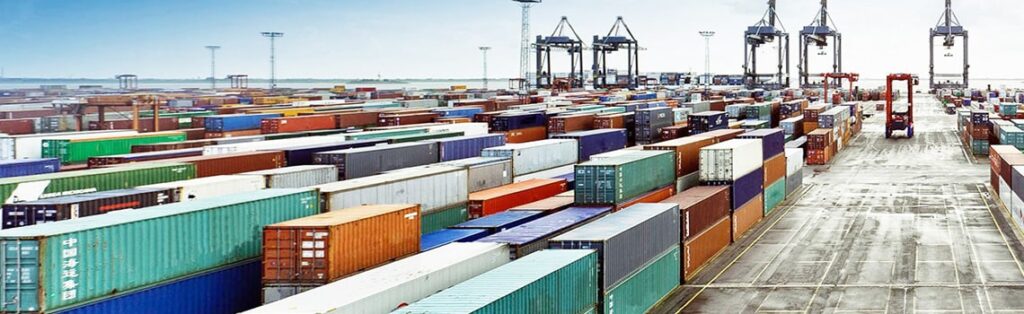
Containers are the lifeblood of modern logistics. The standardization of containers has made it possible to move cargo between ships, trains, and trailers without the need to unload and reload goods.
But choosing the right container has a direct impact on your shipping costs. In this article, we will examine the types of shipping containers in terms of their dimensions and internal and external dimensions.
Comparison table of standard container dimensions
+——————-+—————–+—————–+—————–+—————–+
| Container Type | Length (m) | Width (m) | Height (m) | Approximate Volume (CBM)|
+——————-+—————–+—————–+—————–+—————–+
| 20 ft standard | 5.90 | 2.35 | 2.39 | 33 cubic meters |
| 40 ft standard | 12.03 | 2.35 | 2.39 | 67 cubic meters |
| 40 cubic feet | 12.03 | 2.35 | 2.69 | 76 cubic meters |
+——————-+—————–+—————–+—————–+—————–+
A detailed review of the most commonly used containers
1. Container 20 feet (20ft Dry Container)
This container, also known as a TEU unit, is an excellent option for transporting heavy loads with a relatively small volume (such as stone, small machinery, industrial raw materials, and metal loads).
2. Container 40 feet (40ft Dry Container)
This container (equivalent to 2 TEU) has approximately twice the spatial volume of a 20-foot container and is used for bulky but medium-weight cargo (such as industrial parts, clothing, and household appliances).
3. 40ft High Cube (HQ) container
This container is the same length and width as a regular 40-foot container, but is about 30 centimeters taller. This extra height is very cost-effective for bulky, lightweight cargo or goods that are tall.
Special containers and their uses
- Reefer container: Equipped with a cooling system for transporting food, medicine, and perishable goods.
- Open Top Container: No metal roof and covered with tarpaulin; suitable for high-height loads that must be loaded from above with a crane.
- Flat Rack Container: No side walls; for transporting traffic loads, extra-heavy items, and large machinery.
How to choose the right container for our cargo?
The general formula is simple: if your cargo is heavy but takes up little volume, choose a 20-foot container, and if it is large, choose a 40-foot or 40HQ container.